More space between houses
You may simply want less visual density, more separation and a larger yard. That can change how a neighborhood feels without giving you acreage to manage.
Thompson’s Station · Williamson County
Thompson’s Station tends to show up when someone wants more breathing room than Franklin — or wants to stay in this part of Williamson County while moving a little farther south.
But “more space” can mean several completely different things here.
You might be looking at a planned neighborhood, a larger residential lot, a property with actual acreage, or simply a house surrounded by a landscape that feels more open. Those aren’t interchangeable.
Before you decide you want Thompson’s Station, figure out what kind of space you’re actually trying to buy.
01 · Orientation
Thompson’s Station is an incorporated town in Williamson County, south of Franklin and beside Spring Hill. It is smaller in municipal scale and commercial footprint than either neighbor.
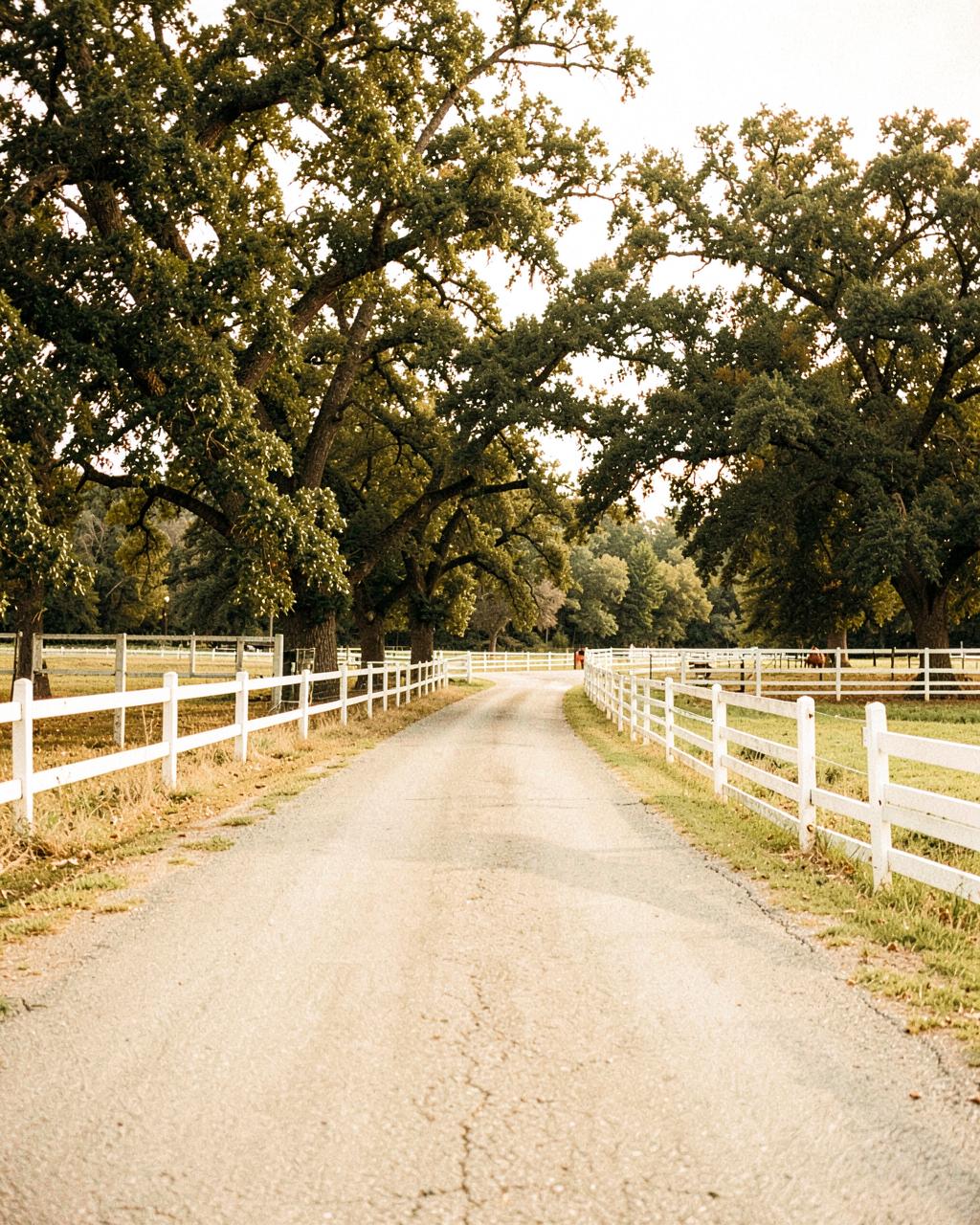
Housing includes established neighborhoods, planned communities and newer development, larger residential lots, acreage and rural-edge properties. Open land and lower-density surroundings remain part of the physical character, but development is changing portions of the area.
Depending on the address and your routine, Franklin and Spring Hill may become part of your regular route for shopping, services or employment. That does not make Thompson’s Station remote or purely rural. It makes the exact address and direction of your week unusually important.
New to the region? Start with the Middle Tennessee relocation guide for the larger county-and-corridor picture.
02 · The defining question
Buyers often group Thompson’s Station into one vague idea: more land, quieter, south of Franklin. That is not specific enough to make a housing decision.
You may simply want less visual density, more separation and a larger yard. That can change how a neighborhood feels without giving you acreage to manage.
A planned community can offer sidewalks, common spaces, amenities and intentional neighborhood design while still feeling less urban than Franklin. Lot sizes, density, amenities and HOA rules vary, so read the specific documents rather than the marketing category.
Land changes the decision. Total acreage is only the start: usable ground, slope, drainage, access, fencing, utilities, outbuildings, maintenance and permitted use all matter. Sewer, septic, public water and well arrangements are property-specific — never assume from the address or acreage alone.
A property can feel rural because of what surrounds it without giving you significant land of your own. Look past listing photography and ask what belongs to the property, what belongs to someone else and what could change around it.
The view can feel like ten acres even when you own one. And owning ten acres can feel very different once you’re responsible for all ten.
03 · Housing and geography
Thompson's Station has a small historic identity and civic center, but it does not function like downtown Franklin. Its town-center experience is much smaller in scale than Franklin's historic downtown, so don't assume the two offer the same walkable commercial experience.
Tollgate Village, Bridgemore Village and Fields of Canterbury are names buyers may encounter. They are not interchangeable, and I won't tell you what any of them currently offer: housing types, lot patterns, amenities, HOA structure, builder availability and street connectivity can differ by community and by section, and can change. Verify what applies to the specific home and community documents.
Some neighborhoods offer more yard and separation without creating an acreage lifestyle. This can be the middle ground for someone who wants room around the house but not the equipment, upkeep or property questions that can come with land.
Inventory varies widely, and two similar acreage numbers can describe completely different land. Property-specific due diligence matters more here than a broad neighborhood label.
Some Thompson's Station addresses function practically around Spring Hill for groceries, services and everyday errands. The municipal name matters less to your routine than the roads between the property and the places you use.
If work, appointments or most of your week pull toward Franklin or Cool Springs, north-south positioning deserves attention. Test the route from the actual address rather than treating the whole town as one commute.
These are orientation categories, not official neighborhood boundaries.
04 · Cost
Don’t assume moving south from Franklin automatically means a lower purchase price. Thompson’s Station spans very different property types, and the difference between a subdivision home, a larger lot and usable acreage can create substantial price variation.
I do not hard-code a median here because current figures age quickly and different sources measure different property sets. What lasts is what moves the number:
I keep current pricing out of the evergreen guide so it can be dated and sourced honestly. There is no verified, regularly refreshed market feed connected to this page, so I would rather show no number than one I cannot stand behind.
Ask me for current numbers based on the property type, amount of land and part of town you are actually considering.
05 · The case for Thompson’s Station
Lower-density surroundings remain part of Thompson's Station's physical character, even as development changes portions of the town.
You can compare planned-community living, larger residential lots and true acreage without pretending they create the same week.
The Town maintains parks, trails and open-space resources. Proximity and access vary by address, so map the places you would actually use.
That position gives residents access to the services and employment centers of both communities without matching either one's commercial intensity inside town.
Some buyers want access to surrounding restaurants, retail and services without living amid the same concentration of them.
Buyers looking for larger lots or land may include Thompson's Station in their Williamson County search, depending on current inventory.
06 · The tradeoffs
None of these are reasons to rule the town out. They are reasons to be precise about what you are buying.
Thompson's Station has fewer restaurants, shops and everyday services within town than Franklin or Spring Hill. Your routine will often cross municipal lines.
This is not a place where one compact walkable center handles most of the week.
If work and much of your life are centered in Nashville, test the actual trip from the property you're considering. Distance, route and time of day can materially change whether the location works for your routine.
More grass, fencing, driveway, drainage or outbuildings can mean more time, equipment and expense. Buy that responsibility intentionally.
Land, usable ground, improvements and location all affect price. Going farther south is not a reliable shortcut to cheap acreage.
Privately owned undeveloped land may change. A rural-looking setting can also bring more questions about utilities, wastewater, access and permitted use.
HOA restrictions may not fit someone who assumed a Thompson's Station address meant an unrestricted country lifestyle.
07 · Land due diligence
A larger lot, acreage, a rural edge or unusual improvements can introduce questions that do not show up in the kitchen photos. Depending on the property, investigate:
The listing description is a starting point, not your due diligence. Terms like “usable acreage,” “horse property,” “buildable,” “private” or “unrestricted” should be independently verified when they matter to your decision.
This guide does not provide legal, engineering, septic, zoning or environmental conclusions. Verify property-specific facts with the appropriate Town or County department and qualified professionals before relying on them.
08 · Equestrian property
Acreage does not make a property horse-ready. An equestrian buyer may need to verify all of the following for the specific parcel:
Five acres on a listing sheet and five acres that actually work for horses are not the same property.
09 · Commute
Thompson’s Station’s lower-density character comes with geography. Someone commuting to Franklin or Cool Springs, downtown Nashville, Spring Hill or Columbia is making a completely different location decision. Someone working from home is making another one.
Regional trips may involve I-65, SR-840 and local north-south routes, depending on the property’s location and destination. The useful route is the one from the actual driveway to the actual destination, not a town-wide average.
The farther you move from your daily destinations, the more your property has to give you in return.
Test the drive you’d actually make, at the time you’d actually make it.
10 · Alternatives
Franklin offers more commercial and lifestyle infrastructure, a historic downtown and broader housing environments. Thompson's Station has a smaller town footprint, lower-density and rural-edge settings in portions of town, and can put larger-lot or acreage properties into the comparison when current inventory allows. Do not assume Thompson's Station will cost less.
Spring Hill is a larger municipality with substantially more commercial and services activity and significant newer suburban housing. Thompson's Station has a smaller municipal footprint and more open-land character in parts. Their geography overlaps in practical daily life, which makes the specific address more useful than the town label.
Someone prioritizing acreage or rural property may eventually compare both. They sit differently relative to Franklin, Spring Hill and regional routes, so the right comparison starts with destinations and the specific land — not a broad country-living category.
Columbia is a larger city farther south with its own historic downtown, commercial base and a different housing-price and property equation. Neither wins in the abstract; they solve different geography and lifestyle problems.
11 · Fit
12 · Buying here
Is the value in the house, the neighborhood, the land or some combination? Name it before comparing prices.
Drive work, groceries, appointments and regular commitments from the actual property.
Ask what portion of the land supports the use you have in mind.
Confirm the setup and records for the specific property rather than assuming from nearby homes.
Review HOA and deed restrictions where applicable, especially before assuming you can add structures, fence, keep animals or use the property a certain way.
Review current planning information, nearby approved development and transportation projects without assuming every visible field will stay the same.
A current survey, easements, road frontage and driveway access can matter as much as the interior inspection.
Compare mowing, fencing, drainage, trees, driveway and outbuilding maintenance with the time and budget you want to spend.
Attendance assignments and boundaries can change. Verify a specific property’s assignment directly with the appropriate district. Property-use, zoning, utility and land questions should be confirmed with the appropriate government department and qualified professional.
13 · Planning
The Town’s current All Aboard Comprehensive Plan includes a General Plan and Major Thoroughfare Plan, while its current Land Development Ordinance governs zoning and subdivision standards. Those are starting points for questions, not predictions about any one parcel.
Open land visible today does not necessarily mean it is protected from future development. That also does not mean development is planned. Review parcel zoning, nearby approved developments, current land-use documents and transportation projects for the area around a specific property.
Distinguish public or protected open space from privately owned undeveloped land.
If the view is part of what you’re buying, find out who owns the view.
14 · Cherie’s take
I love the idea of more space. I just want you to know whether you’re buying space to look at or land you’re responsible for.
A larger property can be exactly the point—but only when the maintenance, access and geography fit the life you actually want.
Tell me what “space” means to you and where your week needs to go. I’ll help you compare the property, not the fantasy.
Tell me whether you’re picturing a bigger yard, more privacy, a planned neighborhood, actual acreage or room for horses — and where your week needs to take you.
Ready to see what’s actually available? Browse current listings on my eXp Realty search.
Browse Homes in Thompson’s Station